
Diagnostic accuracy of self-collected menstrual blood for high-risk human papillomavirus testing for cervical intraepithelial neoplasia and cervical cancer: a systematic review and meta-analysis
Ji X, Ji X, Chen S, et al.Frontiers in Microbiology · 2026DOI 10.3389/fmicb.2026.1782917
In plain language
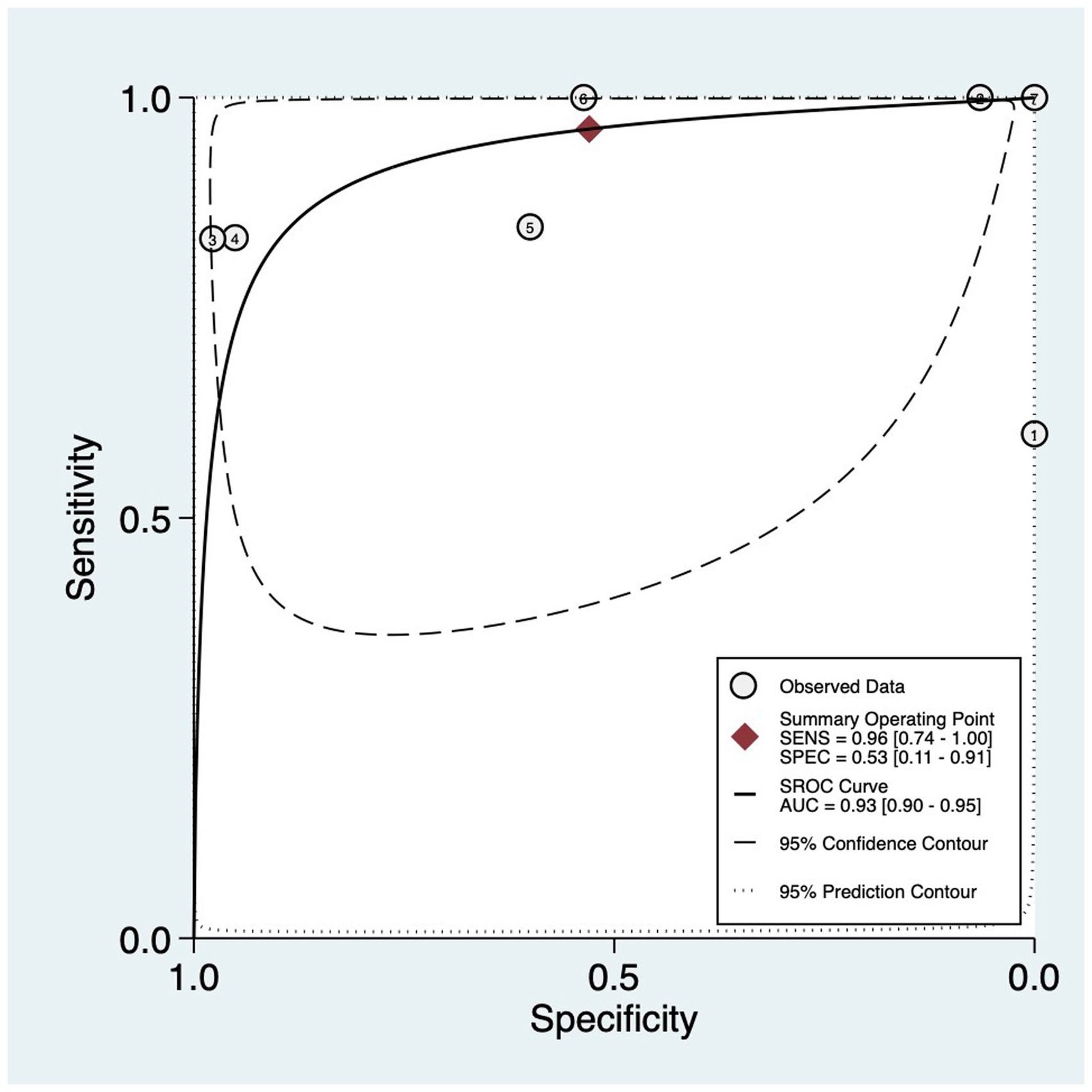
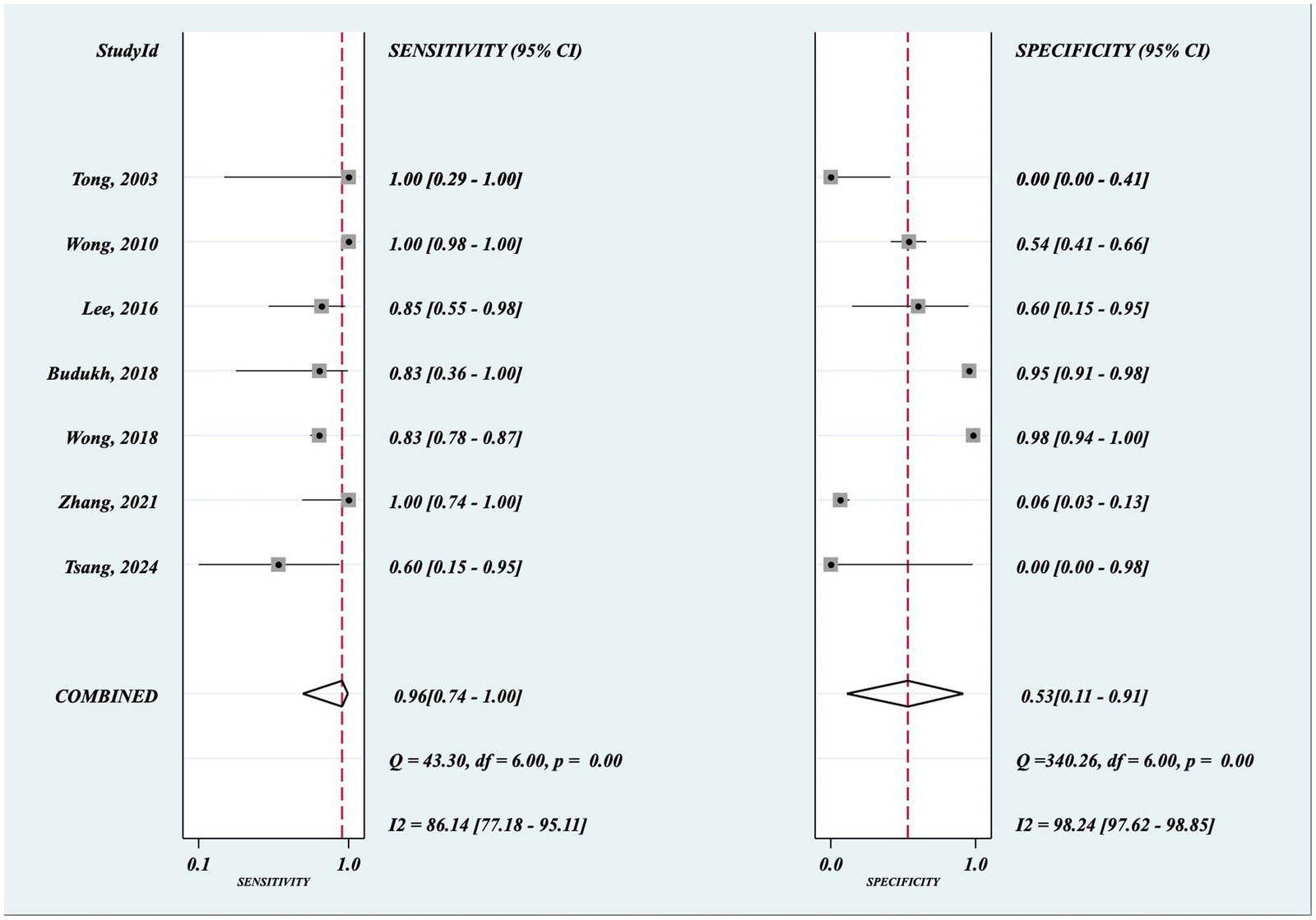
A systematic review and meta-analysis of seven studies with 1,672 women in China, India and South Korea that tested self-collected menstrual blood, on sanitary pads or cloth, for high-risk HPV and confirmed cervical disease by biopsy. Pooled sensitivity for CIN and cervical cancer was 0.96 and pooled specificity 0.53, with very high heterogeneity between studies.
Key numbers
- 7 / 1,672
- Studies / women pooled
- 0.96
- Pooled sensitivity for CIN and cervical cancer
- 0.53
- Pooled specificity
What it means
Menstrual blood HPV testing rarely missed cervical disease in these studies but gave many false positives, partly because most studies counted mild CIN1 as disease. A separate 2026 meta-analysis that compared menstrual blood with clinician-collected HPV tests, rather than with biopsy, found a pooled sensitivity of 0.86 and specificity of 0.90.
What it does not show
Only seven mostly small, hospital-based studies were included, with very high heterogeneity (I² of 86% for sensitivity and 98% for specificity). The search ended in October 2024, so more recent and larger studies are not included.
Figures
Figures reproduced unchanged from Ji X et al., Frontiers in Microbiology, 2026, under CC BY 4.0. Captions written by Qvin.
How to cite
Ji X, Ji X, Chen S, Wang X, Liu X. Diagnostic accuracy of self-collected menstrual blood for high-risk human papillomavirus testing for cervical intraepithelial neoplasia and cervical cancer: a systematic review and meta-analysis. Frontiers in Microbiology. 2026;17:1782917. doi:10.3389/fmicb.2026.1782917