
Menstrual blood, turned into answers.
Close to two billion people menstruate every month, and almost all of that blood is thrown away. We build the science and the system to turn it into answers for women’s health.
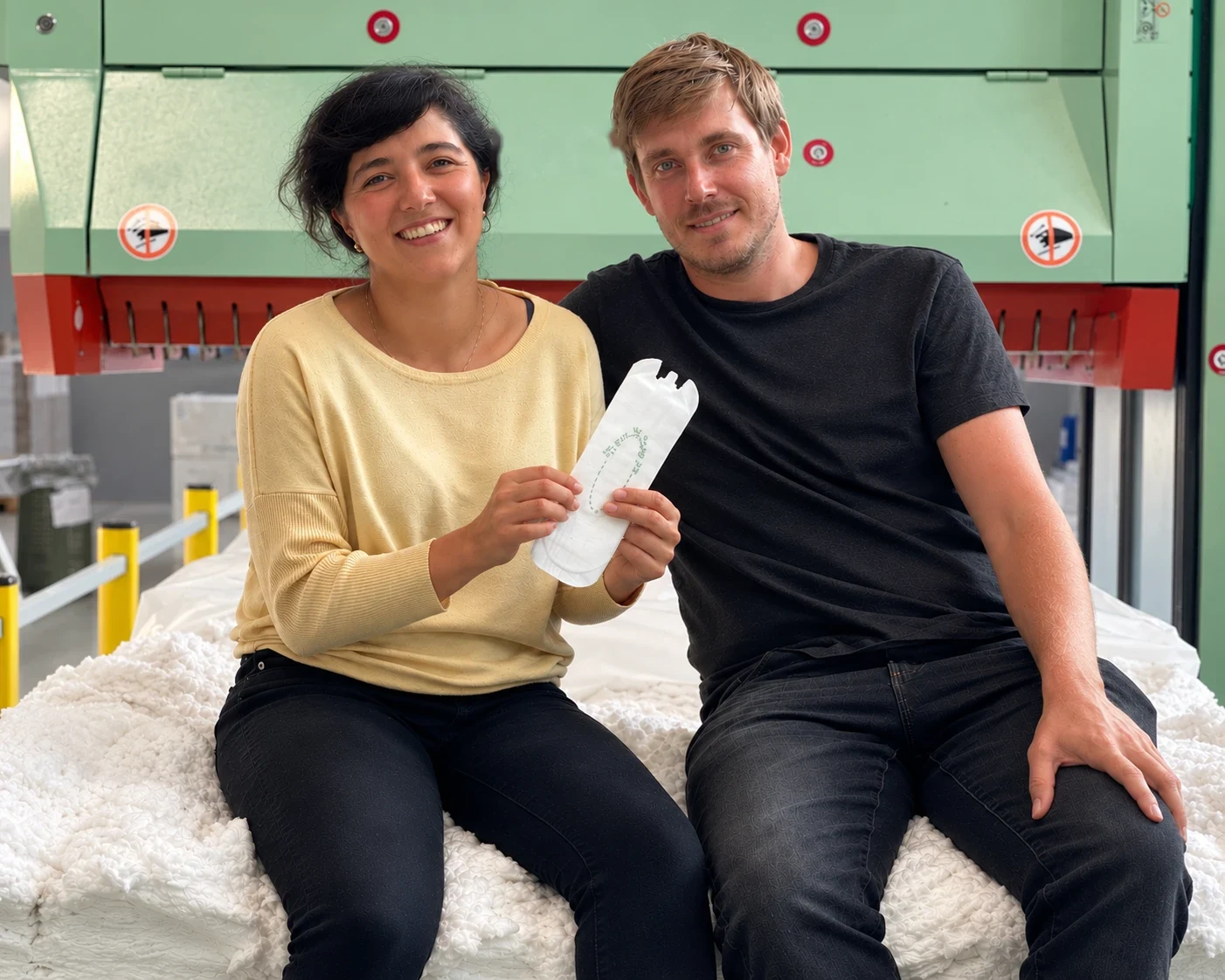
One question, a decade of work.
- 01 · The question
Is menstrual blood a sample?
In medical school, Sara searched for research on menstrual blood and found almost none: the most detailed paper came from a forensics lab. Yet it is shed every month, and it carries blood, cells from the uterus and fluid from the reproductive tract. In 2014, Sara and Søren founded Qvin to find out what it could tell us.
- 02 · The turn
From a lab in the pad to the pad to the lab.
Our first idea was to analyze the blood inside the pad. We studied microfluidic fabrication at Harvard and patented the lab in the pad. Then, at Y Combinator in 2016, we turned it around: a dried sample, collected passively at home and analyzed in a real laboratory, test by test.
- 03 · The system
Building every part ourselves.
Making that work took hundreds of prototypes, and then the whole system around them: the Q-Pad, its manufacturing, the app, the logistics, the lab software and Qvin Labs. In December 2023, the FDA cleared the Q-Pad Test System, the proof that menstrual blood can meet the bar of regulated testing.
Every period,
a window into her health.
Menstrual blood comes to her every month, at home, without a needle or a clinic. Followed over a lifetime, it could show how a woman’s health is changing and find disease years earlier. That is the future we are building.
- No needles.
- No clinic.
- Every month.
Year by year.
- 2014
Qvin is founded
Sara and Søren start Qvin with one question: what can menstrual blood tell us about health?
- 2015
A lab in the pad
We study microfluidic fabrication at Harvard University and file our first international (PCT) patent, for the lab in the pad.
- 2016
Y Combinator
At Y Combinator we pivot from the lab in the pad to the pad to the lab: a dried sample on a removable strip, analyzed in a laboratory.
- 2017
Hundreds of prototypes
With Brian Weinberg, we design, build and test prototype after prototype of the pad and its strip.
- 2018
Research and development
Extensive studies on the device and the sample shape the Q-Pad into something women can use and labs can trust.
- 2019
The first peer-reviewed study
Research with Stanford shows that many common markers agree between menstrual and venous blood.
- 2020
A home in Menlo Park
We build out integrated manufacturing and a laboratory in Menlo Park, under one roof.
- 2021
Patents granted
Our first patents are granted in Japan, Australia and the United States.
- 2022
HbA1c and HPV
Peer-reviewed studies show menstrual blood can monitor HbA1c and screen for high-risk HPV.
- 2023
FDA clearance
Studies on inflammation follow, and in December the FDA clears the Q-Pad Test System.
- 2024
TIME Best Inventions
TIME and Popular Science recognize the Q-Pad, and a new study shows reproductive hormones agree with venous blood.
- 2025
A platform for partners
Qvin opens its system to research and diagnostic partners, and the EQUIP study on cervical precancer begins.
- 2026
The full platform
The FDA inspects our facility, the European patent is granted, and DNA methylation is read from Q-Strips stored for over two years.
The people leading Qvin.
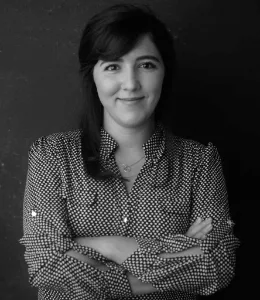 Sara Naseri, MDCEO and Co-founder
A medical doctor who began researching menstrual blood in medical school, and continued as a visiting researcher at Stanford. She leads Qvin and its science.
LinkedIn for Sara Naseri, MD Søren TherkelsenCPO and Co-founder
Leads product. He built the first lab in the pad, studied microfluidic fabrication at Harvard, and has led the platform from the Q-Pad to the lab software.
LinkedIn for Søren Therkelsen Brian WeinbergVP of R&D
A medical-device engineer with deep blood-filter experience. He led the hundreds of prototypes that became the Q-Pad, and its manufacturing in Menlo Park.
LinkedIn for Brian Weinberg Paul Blumenthal, MDSenior Clinical Director
Professor of Obstetrics and Gynecology, Emeritus, at Stanford. He has advised the WHO and published over 200 papers, including Qvin’s own studies.
Stanford profile for Paul Blumenthal, MD Charles Sailey, MDLaboratory Director
A physician who directs Qvin Labs in Menlo Park. He is responsible for the quality of our laboratory, and reviews results before they are released.
LinkedIn for Charles Sailey, MD
Guided by leaders in medicine, research and regulation.
 Gabriel OttePartner, Healthcare Co-op
Advises on partnerships and strategy.
 Ruben Alvero, MDProfessor of OB/GYN, Stanford Medicine
Advises on reproductive medicine.
 Marina Walther-Antonio, PhDOB/GYN research, Mayo Clinic
Advises on women’s health research.
 Gemma Sharp, MD, PhDProfessor of Epidemiology, Exeter
Advises on population studies.
 Alberto Gutierrez, PhDRegulatory expert, NDA Partners
Advises on diagnostics regulation.
 Kate BlackData privacy and health, Hintze Law
Advises on health data privacy.