
Menstrual Effluent Provides a Novel Diagnostic Window on the Pathogenesis of Endometriosis
Nayyar A, Saleem MI, Yilmaz M, et al.Frontiers in Reproductive Health · 2020DOI 10.3389/frph.2020.00003
In plain language
Stromal cells grown from the menstrual effluent of 24 women with surgically confirmed endometriosis and 23 controls were tested for decidualization, the change the uterine lining makes to prepare for pregnancy. Cells from women with endometriosis decidualized less, a test built on this separated cases from controls with an area under the curve of 0.92 (87.5% sensitivity, 91.7% specificity), and exposing control cells to the inflammatory cytokines TNF and IL-1β produced similar changes.
Key numbers
- 24 vs 23
- Women with confirmed endometriosis versus controls
- AUC 0.92
- Decidualization assay, cases versus controls
- 87.5% / 91.7%
- Sensitivity / specificity at the optimal cut-off
What it means
Live cells shed in menstrual effluent carry a measurable difference in endometriosis, and the same difference can be induced in healthy cells by inflammation. It supports the idea that menstrual effluent could one day help flag endometriosis without surgery.
What it does not show
Controls were self-reported, not surgically checked, and the cut-off was set and tested in the same small case-control group. The assay needs fresh, live cells cultured in a lab, which a dried sample cannot provide.
Figures
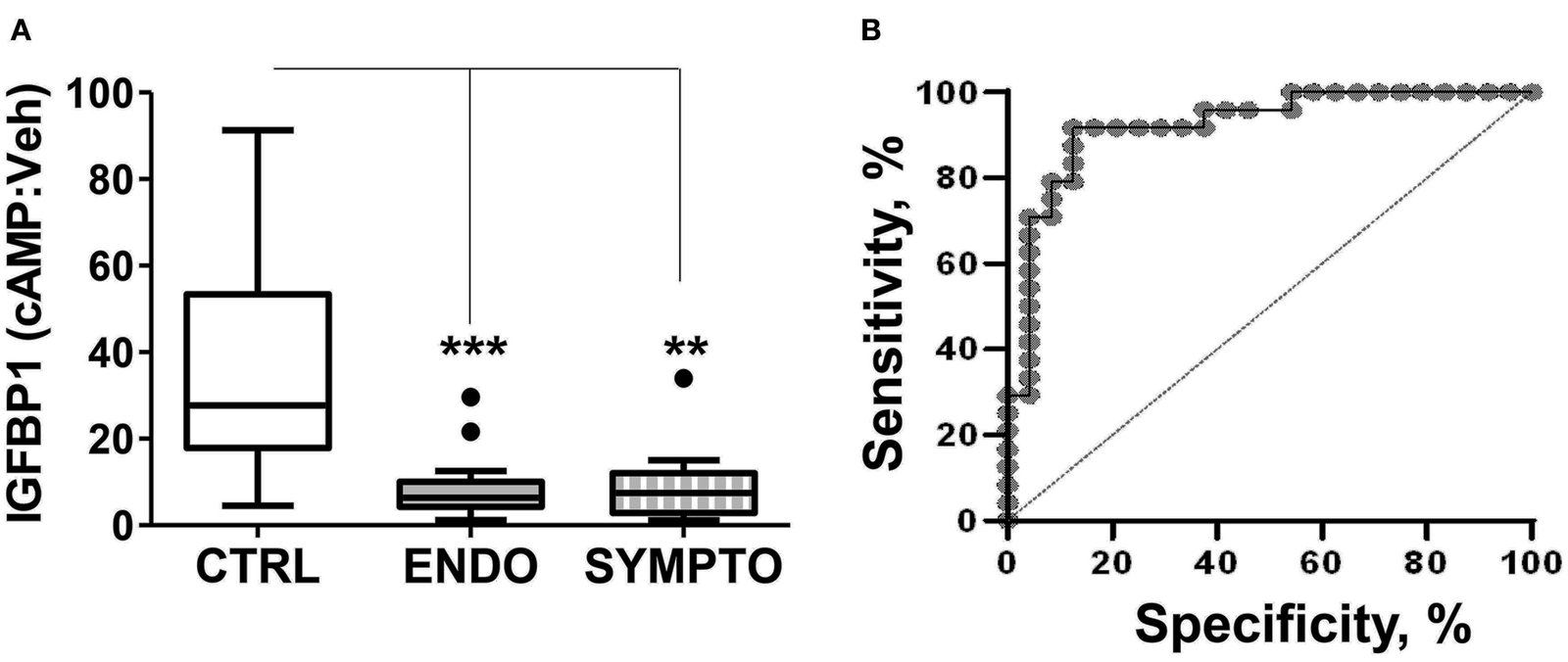
Figures reproduced unchanged from Nayyar A et al., Frontiers in Reproductive Health, 2020, under CC BY 4.0. Captions written by Qvin.
How to cite
Nayyar A, Saleem MI, Yilmaz M, DeFranco M, Klein G, Elmaliki KM, et al. Menstrual Effluent Provides a Novel Diagnostic Window on the Pathogenesis of Endometriosis. Frontiers in Reproductive Health. 2020;2:3. doi:10.3389/frph.2020.00003