
BIOMARKER DISCOVERY
Transforming Women's Health Through
Menstrual Blood

FDA-cleared
First menstrual blood test

CE & UKCA
Globally compliant kit

10,000+
Q-Pads deployed

Extensive research
Peer reviewed science

Standardized
Built for scale
The Opportunity - MENSTRUAL BLOOD
A recurring biological signal
absent from modern medicine
Menstrual Physiology
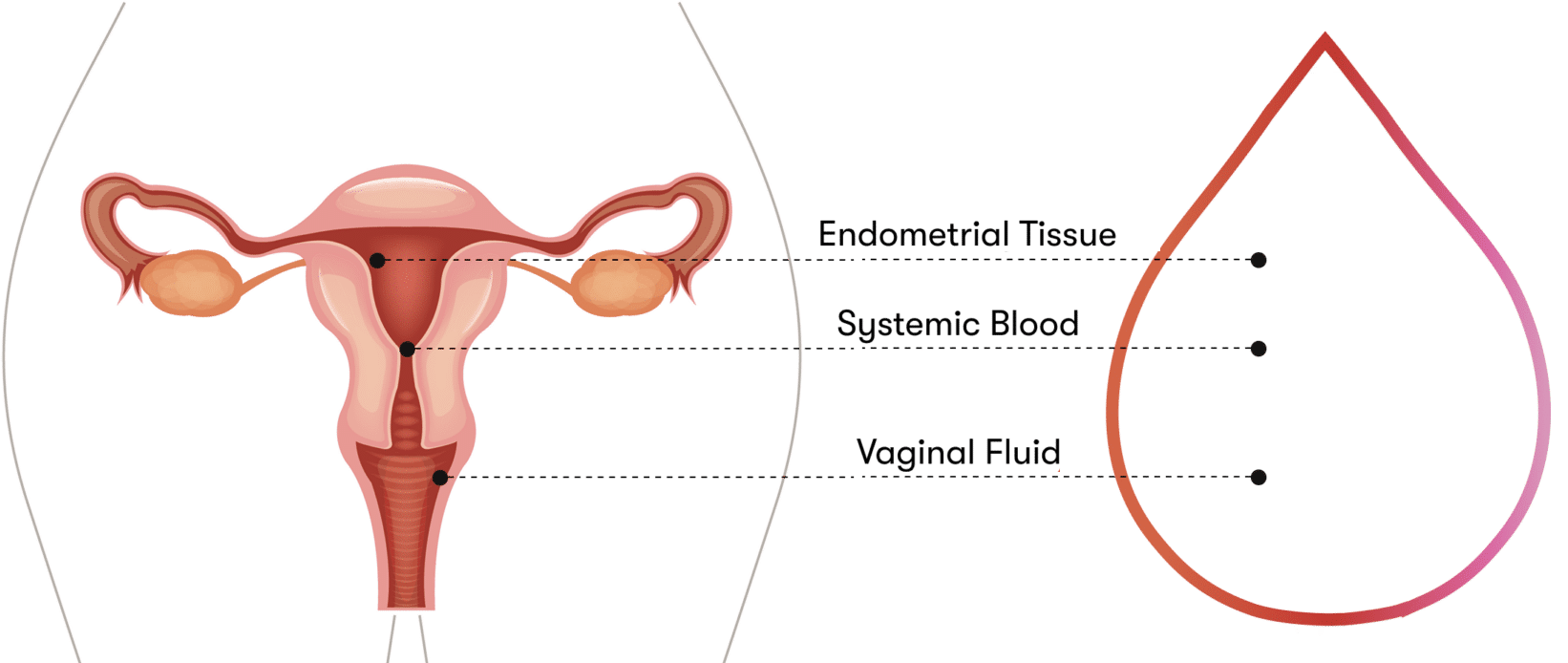
Menstruation is the cyclical shedding of the endometrium, involving tissue breakdown, vascular remodeling, inflammation, and repair. The sample contains blood, endometrial material, proteins, nucleic acids, metabolites, hormones, extracellular vesicles, and microbiome-derived signals which can be tested molecularly [1].
Molecular composition
Laboratory methods such as PCR, sequencing, DNA methylation, proteomics, immunoassays, metabolomics, microbiome profiling, and extracellular-vesicle analysis can be applied. These methods can support diagnosis, risk stratification, treatment selection, and longitudinal monitoring [1–3].
Conditions linked
The strongest opportunities are conditions linked to the uterus, endometrium, cervix, or reproductive tract, including endometriosis, fibroids, cervical cancer, STIs, diabetes, adenomyosis, heavy menstrual bleeding, infertility, menopause transition, and gynecologic cancers [2–5].
WHY HAS THIS BEEN OVERLOOKED?
The limitation has not been scientific potential, but scaleable collection
At-Home Collection Is Essential
Menstruation is unpredictable across environments and multiple days. Any viable system must account for this dynamic environment, while ensuring ease of use. Designing a solution requires a deep understanding of a womens day-to-day life.
Inconsistent and Impractical Collection
Research has relied on menstrual cups for lab convenience, but they create barriers. Adoption is limited by usability challenges, discomfort, and cultural constraints, reducing participation and limiting representative, scalable data.
Sample Stability and Logistics
Samples must remain stable across temperature changes, shipping delays, and decentralized handling. Without stabilization, degradation reduces data integrity and limits reliability for research and clinical use.
Lack of Standardized Infrastructure
Variation in collection, processing, and analysis prevents reproducibility. Without standardized systems linking collection, logistics, and labs, research remains fragmented and difficult to scale. Research tems reinvent the wheel every time!
Cultural and Social Stigma
Menstruation stigma has historically limited the discussion and the investigation, and in some cultures, it's still "bad blood". A male dominated healthcare system has also restricted the development of large, diverse datasets.
Chronic Underinvestment
Women’s health, particularly menstrual health, has historically received limited funding. This constrains tools, infrastructure, and long-term studies, leaving key biological signals underutilized, despite it's clear potential for public good.
The solution
We've created a platform for
distributed research

1. It starts with collection!
Scalable sample collection, designed for real-world use
Q-Pad kit
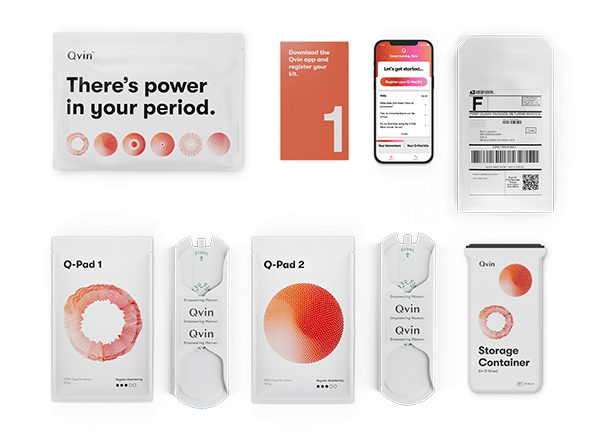
The Q-Pad enables clinical-grade menstrual blood sampling by integrating into existing behavior. Samples are collected passively at home without training, forming the foundation of the world’s first and only FDA-cleared menstrual blood test. Standardized kits include all components required for consistent collection, packaging, and return across populations.
Collection infrastructure
We have built a fully integrated end-to-end infrastructure spanning device manufacturing, kit assembly, and distribution through to laboratory processing, biobanking, and data management. Standardized workflows and digital systems enable seamless coordination of collection, tracking, and analysis, while supporting multiple parallel research studies at scale.
2. Data Capture
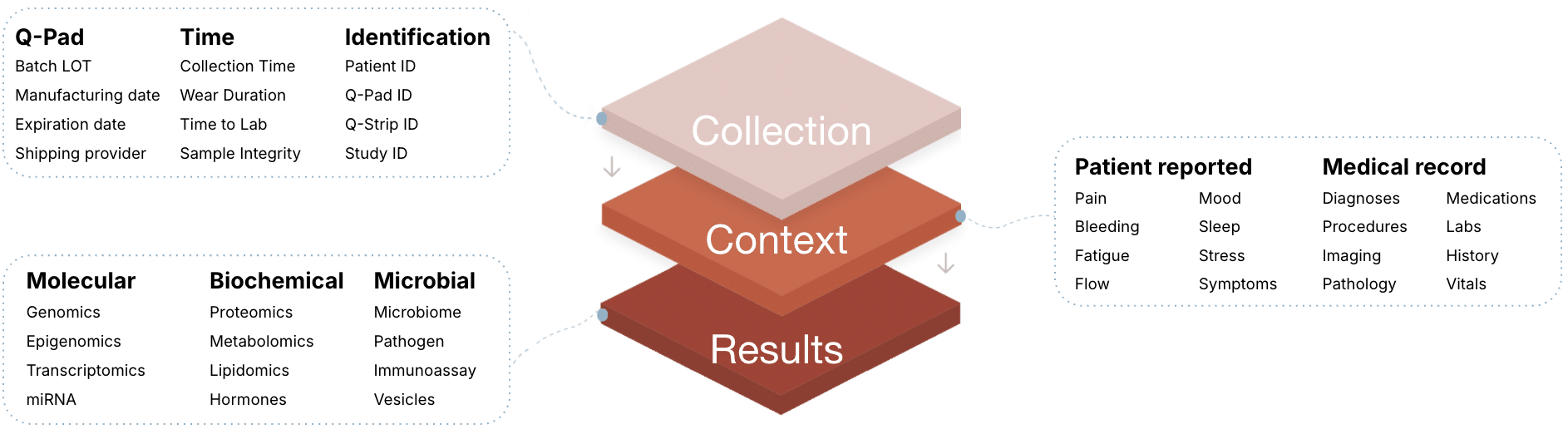
Linked data from collection to clinical insight
Collection
- Patients use the Qvin app to link the Q-Pad ID to their secure account
- Q-Pads are connected to studies with prestamped mailers directed to the lab
- Laboratories accession kits with the Samples app and biobanks residuals
- Time-stams, pictures, wear duration, and other logistics meta data are captured
Context
- Using the app, patients report symptoms, surveys etc. at point of collection
- Integration with Medical records provides access to patients medical history
- Comparative samples are linked (blood draws, swabs, and procedures)
- Structured data models enable longitudinal tracking across populations
Results
- Standardized intake protocols assess sample quality and condition
- Defined workflows specify elution methods and preparation steps
- Instrumentation, assay ranges, and analytical methods are captured
- Structured results are uploaded to the central Qvin database
Aggregated AND STRUCTURED data

3. Centralized Biobank and AI Discovery Platform
Linked data from collection to clinical insight
Diabetes by the Numbers
Live with diabetes.
Are unaware of their diabetes.
Deaths due to diabetes.
Qvin Simplifies
Diabetes Monitoring
Rationale for the Q-Pad for Diabetes
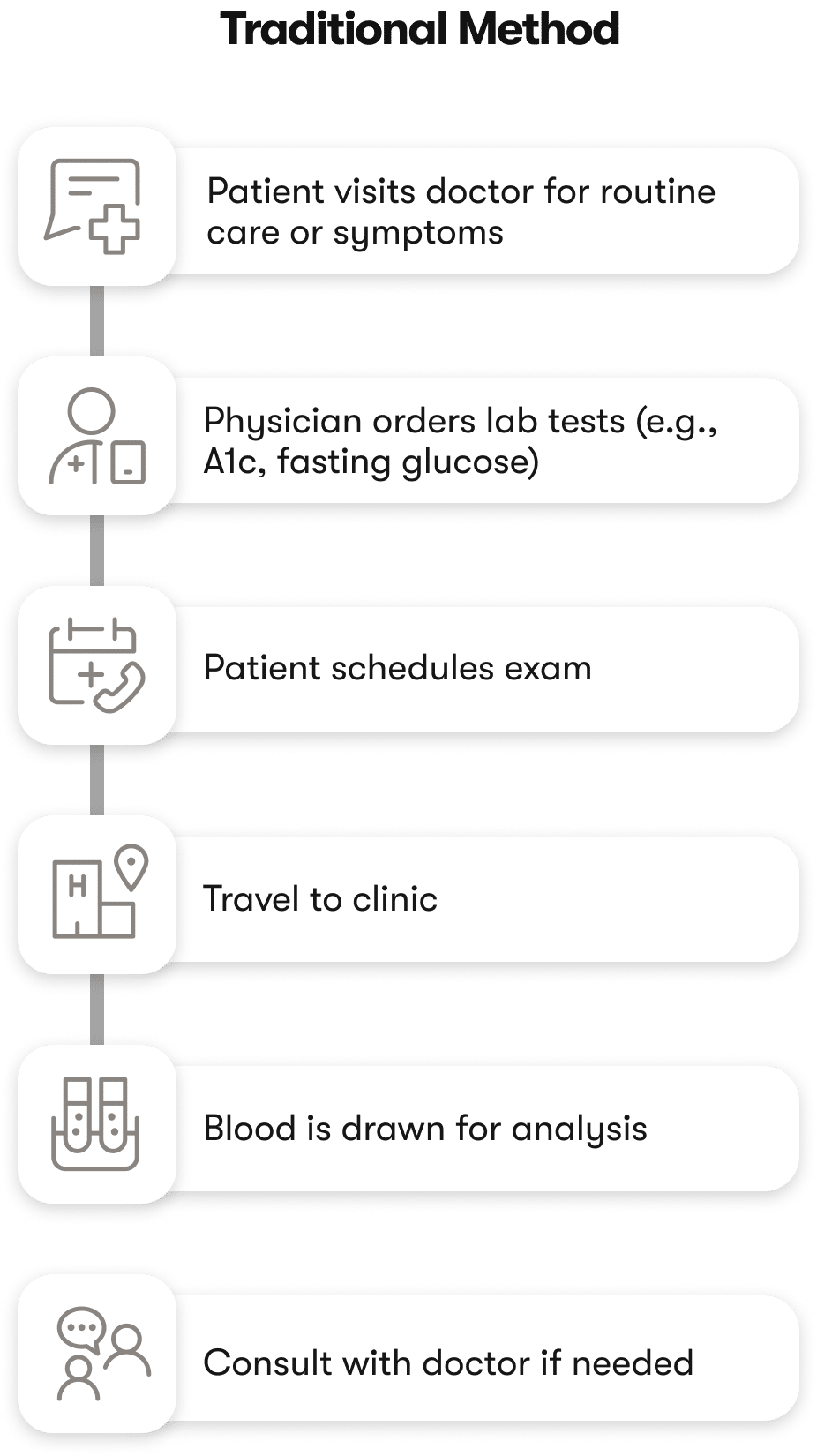
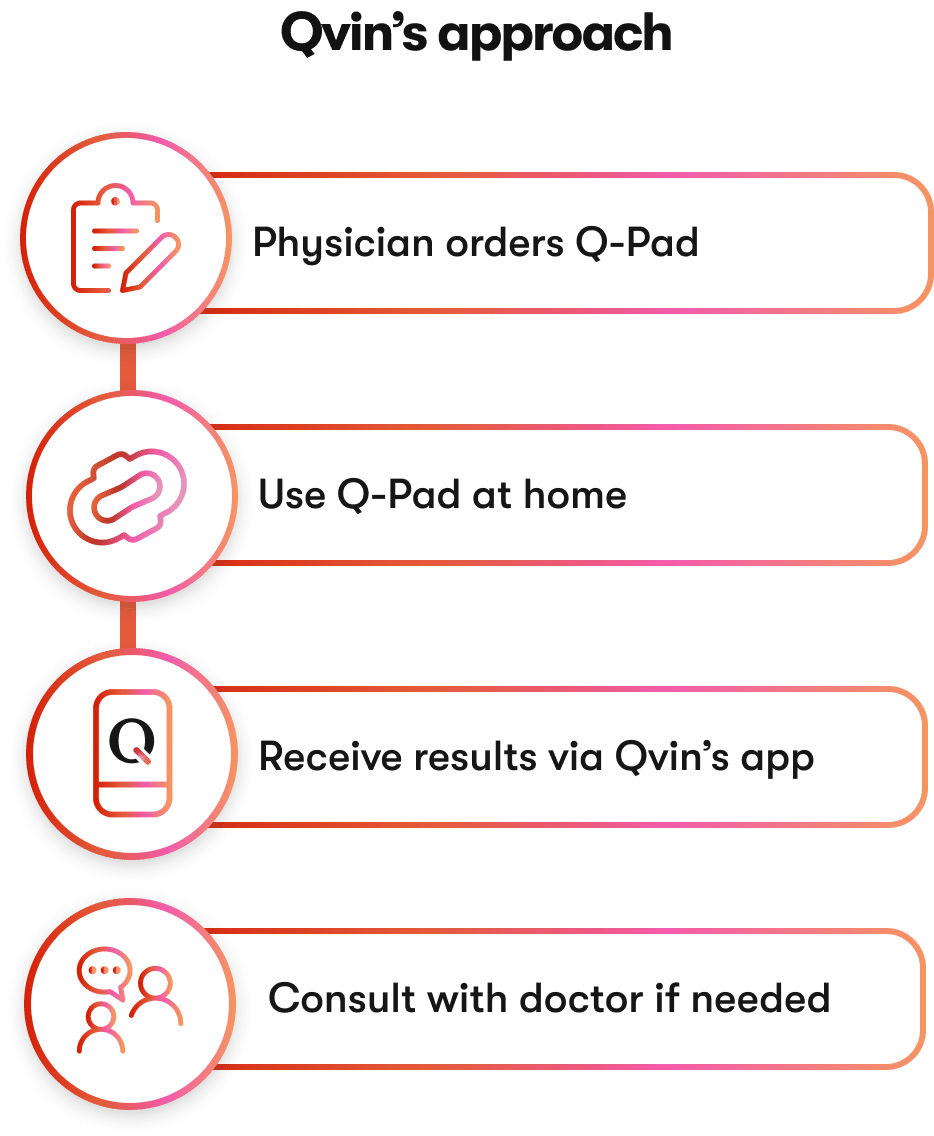
Qvin’s Q-Pad—a modified menstrual pad embedded with a dried blood spot (DBS) strip—offers a clinically validated, non-invasive solution for diabetes monitoring by enabling self-collection of menstrual blood (MB). MB is a complex biological fluid containing whole blood, endometrial tissue, and vaginal secretions, and has demonstrated strong concordance with venous blood for key clinical biomarkers, including hemoglobin A1c (HbA1c), the gold-standard indicator of long-term glycemic control. In both healthy and diabetic populations, Q-Pad-collected HbA1c levels showed correlation coefficients up to r = 0.96 and a mean bias below 1% when compared with venipuncture samples, supporting its analytical accuracy and reliability [1][2]. The Q-Pad addresses barriers associated with traditional blood collection—such as fear of needles, logistical constraints, and clinic access—by passively collecting stabilized samples during menstruation, which are then processed using standard laboratory instrumentation. Recognized and cleared by the FDA [3], the Q-Pad represents a novel and scalable approach to expand access to chronic disease monitoring, particularly for women in underserved or remote settings.
References
[1] Shafiq SM, et al. “Beyond waste: menstrual blood as a powerful diagnostic tool for women’s health.” Annals of Medicine & Surgery, 2025/2026.
[2] Brennan K, et al. “Menstrual blood serum extracellular vesicles reveal novel molecular biomarkers and potential endotypes of unexplained infertility.” Scientific Reports, 2025.
[3] Gurung S, et al. “Potential Role of Menstrual Fluid-Derived Small Extracellular Vesicle Proteins in Endometriosis Pathogenesis.” Journal of Extracellular Vesicles, 2025.
[4] Tian X, et al. “Testing menstrual blood for human papillomavirus during cervical cancer screening in China.” BMJ, 2026.
[5] Naseri S, et al. “Screening for High-Risk Human Papillomavirus Using Menstrual Blood Collected on a Menstrual Pad.” Obstetrics & Gynecology, 2022.
JOIN US
Monitoring diabetes can
improve health outcomes.
Be a part of the solution and transform diabetes care.

Funding
If you represent a diagnostic platform, healthcare organization, or country-level agency and would like to work with us, please fill out this form and we will get back to you.

Research
If you are a scientist, foundation, or non-profit interested in collaborating on studies or supporting our innovation, please fill out the form and we will get back to you.